






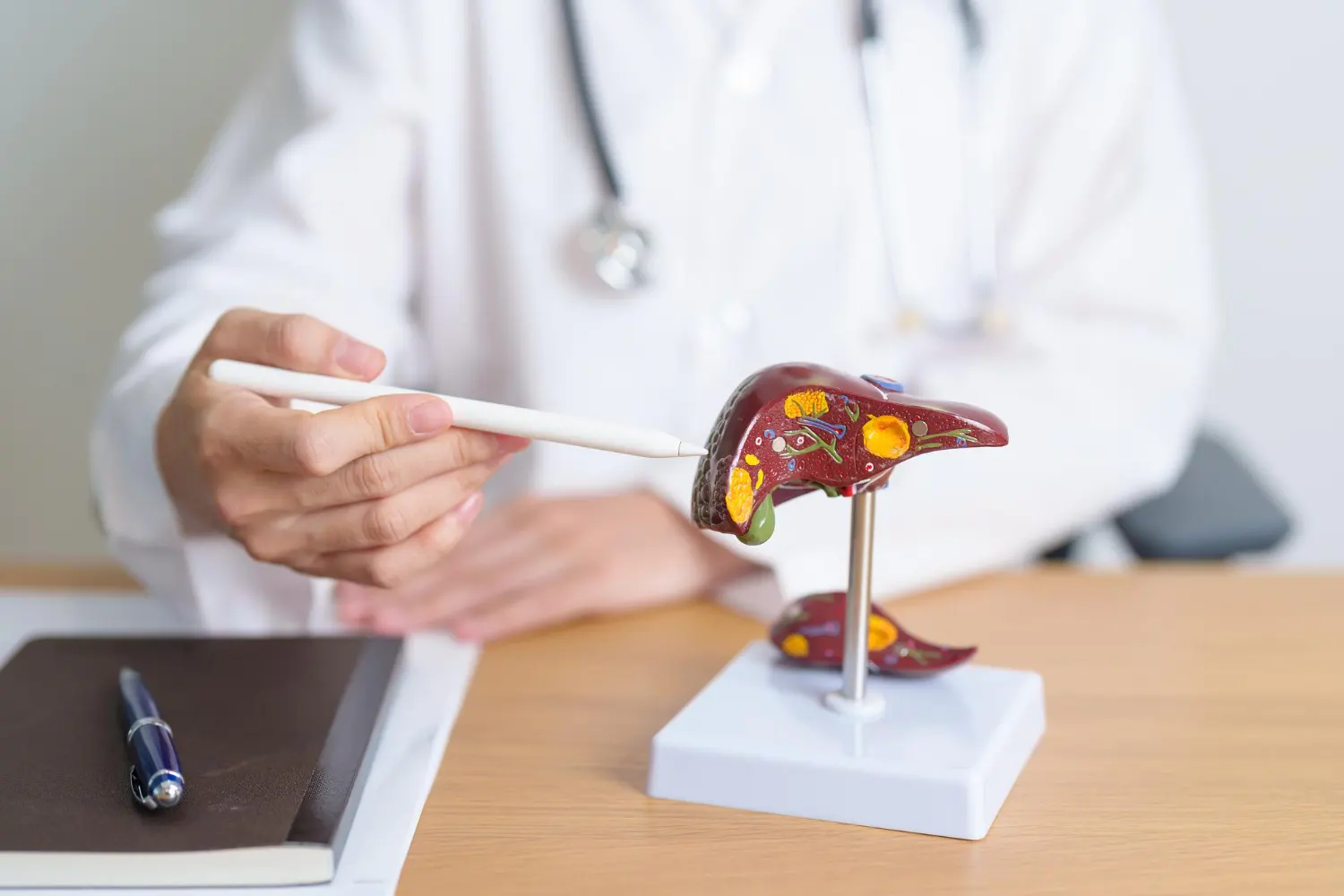
While liver cancer is a known global health burden, many are unaware of the rare, aggressive form known as angiosarcoma of the liver. Accounting for less than 2% of all primary hepatic malignancies, this vascular tumor is difficult to detect and even harder to treat. Angiosarcoma of the liver often presents with subtle or nonspecific symptoms and is typically diagnosed in its advanced stages—when therapeutic options are limited and prognosis is poor.
Despite its rarity, this cancer demands attention because of its rapid progression, high mortality rate, and unique causes tied to occupational and environmental exposures. Early detection and tailored treatment strategies are essential for improving survival and quality of life. This article examines hepatic angiosarcoma in depth, from risk factors and symptoms to diagnosis, treatment, and current research directions.
In This Article
What Is Angiosarcoma of the Liver?
Angiosarcoma is a malignant tumor arising from the endothelial cells that line blood vessels. When this tumor originates in the liver, it is classified as primary hepatic angiosarcoma (PHA). This is distinct from metastatic angiosarcoma, which spreads to the liver from another site.
PHA is notorious for being aggressive, highly vascular, and prone to bleeding. The tumors often present as multifocal lesions that infiltrate liver tissue and rupture internal blood vessels, making both diagnosis and treatment challenging.
Median survival following diagnosis is dismal—typically 6 to 12 months, even with treatment (Molina & Hernandez, 2021). Because of its stealthy onset and fast progression, hepatic angiosarcoma often goes undetected until it has significantly compromised liver function or spread to other organs.
Epidemiology and Risk Factors
Angiosarcoma of the liver is extremely rare, with an estimated global incidence of 0.14 to 0.25 cases per million people per year (Fayette et al., 2007). It occurs most frequently in men over the age of 60 and is associated with specific occupational and chemical exposures.
Key Risk Factors:
| Risk Factor | Details |
|---|---|
| Vinyl chloride exposure | Used in the production of PVC plastics; strongly linked to liver angiosarcoma. |
| Thorium dioxide (Thorotrast) | A radioactive contrast agent used in the mid-1900s; now banned. |
| Anabolic steroids | Long-term use may stimulate abnormal vascular growth in the liver. |
| Chronic arsenic exposure | Found in contaminated water and pesticides; historically linked to liver tumors. |
| Idiopathic cases | Over 50% of cases occur without any known trigger or exposure. |
Although chemical exposure remains the most significant known cause, the majority of patients today have no identifiable risk factors, suggesting that other genetic and environmental components may play a role.
Signs and Symptoms: When the Liver Sends a Warning
Diagnosing hepatic angiosarcoma is complicated by its vague clinical presentation. Many symptoms mimic those of benign liver conditions or other more common cancers, leading to delays in detection.
Right upper quadrant abdominal pain is often the first and most prominent symptom. As the tumor grows, it stretches the liver capsule or presses against nearby structures, resulting in persistent or sharp discomfort.
Fatigue and weight loss are nonspecific but common indicators of systemic illness. These symptoms typically result from the metabolic demands of cancer and the body’s inflammatory response.
Nausea and decreased appetite may be due to liver dysfunction or compression of the stomach and intestines by the enlarging tumor. This symptom exacerbates malnutrition and weakness.
Abdominal distention from ascites can occur due to disrupted liver function and portal hypertension. Patients often feel bloated, with visible swelling and fluid buildup in the abdomen.
Jaundice (yellowing of the skin and eyes) develops when bile flow is obstructed by the tumor, or the liver fails to process bilirubin effectively. This symptom may indicate advanced disease.
Anemia and internal bleeding are serious complications due to the tumor’s tendency to rupture blood vessels. In some cases, patients experience sudden, massive internal bleeding (hemoperitoneum), requiring emergency care.
Diagnostic Challenges and Imaging
Because of its rarity and nonspecific symptoms, hepatic angiosarcoma is often mistaken for more common liver cancers or benign conditions like hemangiomas.
Imaging Techniques:
Ultrasound may detect irregular, hypoechoic liver masses, but the findings are nonspecific. Vascularity might be noted, but further imaging is required for diagnosis.
CT (Computed Tomography) and MRI (Magnetic Resonance Imaging) are more informative. Lesions usually demonstrate heterogeneous enhancement, central necrosis, and rapid growth. Still, their appearance often overlaps with hepatocellular carcinoma (Lee & Oh, 2018).
PET-CT (Positron Emission Tomography with CT) helps in assessing metabolic activity and detecting metastases. It is particularly useful in treatment planning and monitoring response.
Biopsy and Histopathology
A definitive diagnosis requires liver biopsy, though this is risky due to the tumor’s fragile, vascular nature. Histological examination reveals spindle cells, atypical endothelial lining, and frequent mitotic activity. Immunohistochemical staining typically shows positivity for CD31, CD34, and Factor VIII-related antigen, confirming vascular origin (Antonescu, 2011).
Genetic and Molecular Insights
Modern molecular analysis has shed light on several key genetic alterations involved in hepatic angiosarcoma:
- TP53 mutations, particularly in cases related to vinyl chloride exposure, lead to loss of cell cycle regulation and increased tumor growth.
- KDR gene amplification, affecting VEGFR-2, promotes angiogenesis and tumor vascularity, making this gene a promising therapeutic target.
- MYC gene amplification, associated with highly aggressive disease, contributes to unregulated cell proliferation and resistance to standard therapies.
These discoveries offer hope for more personalized and effective treatment in the future.
Treatment Strategies: Navigating a Difficult Landscape
Due to the tumor’s rapid progression and diffuse nature, treatment options are limited and often palliative.
1. Surgical Resection
When feasible, surgical resection is the most effective treatment. It offers the best chance for prolonged survival, particularly if the tumor is localized. However, less than 20% of patients are eligible for surgery due to advanced disease at presentation. Even after complete resection, recurrence is common, and median survival remains approximately 17 months (Molina & Hernandez, 2021).
2. Liver Transplantation
Unlike other liver cancers, transplantation is not recommended for angiosarcoma. The recurrence rate is nearly 100%, often occurring within months after surgery (Bruix & Sherman, 2011). Outcomes are consistently poor, disqualifying this option from standard treatment protocols.
3. Chemotherapy
Systemic chemotherapy remains the mainstay for unresectable cases, though response rates are modest:
- Doxorubicin and ifosfamide are commonly used sarcoma agents.
- Paclitaxel has shown moderate activity in vascular sarcomas.
- Gemcitabine and docetaxel, while effective in soft tissue sarcomas, show limited results in hepatic angiosarcoma due to poor tumor sensitivity.
4. Targeted Therapy and Immunotherapy
Experimental treatments are currently under investigation:
| Therapy Type | Agents | Mechanism | Evidence Status |
|---|---|---|---|
| VEGF Inhibitors | Bevacizumab, pazopanib | Inhibit tumor angiogenesis | Limited case reports |
| Tyrosine Kinase Inhibitors (TKIs) | Sorafenib, sunitinib | Block oncogenic signaling pathways | Off-label, under study |
| Immunotherapy | Pembrolizumab, nivolumab | Activate immune system against cancer cells | Anecdotal success in soft tissue sarcomas |
Clinical trials are the best avenue for these therapies, offering hope where traditional treatments fall short.
Prognosis and Survival Rates
The outlook for hepatic angiosarcoma is poor, with survival often measured in months.
| Stage at Diagnosis | Median Survival | Key Considerations |
|---|---|---|
| Localized | 12–17 months | Surgery may be an option |
| Regional (intrahepatic) | 6–9 months | Limited curative potential |
| Metastatic | <6 months | Supportive care and palliative management |
Rapid progression, vascular fragility, and limited treatment responsiveness all contribute to this grim prognosis.
Early Detection and Surveillance: Why It Matters
Given its aggressive nature, early detection is crucial for improving outcomes. While there are no formal screening guidelines, at-risk individuals—such as those with known vinyl chloride or thorium dioxide exposure—should undergo routine imaging and liver function tests starting in middle age.
Timely biopsy of unusual liver lesions is essential to avoid misdiagnosis. Referral to a tertiary liver cancer center is strongly advised for patients with suspected or confirmed angiosarcoma, as these institutions are better equipped to provide advanced imaging, molecular diagnostics, and access to clinical trials.
Clinicians should be vigilant in older adults with multifocal liver lesions and atypical imaging features. Including angiosarcoma in the differential diagnosis can be lifesaving.
Conclusion: A Rare Cancer with Real Consequences
Angiosarcoma of the liver may be rare, but it is one of the most lethal forms of hepatic cancer. Its subtle onset, environmental associations, and resistance to conventional therapy make it a challenging diagnosis. Still, advances in molecular profiling, targeted therapies, and clinical trial networks provide hope for better outcomes in the future.
Early detection and specialist referral are key. For patients with known risk factors—or even those without obvious exposure—prompt investigation of liver abnormalities can mean the difference between supportive care and a potentially life-extending intervention.
References
- Antonescu, C. R. (2011). The role of genetic testing in soft tissue sarcomas. Current Opinion in Oncology, 23(4), 357–363.
- Bruix, J., & Sherman, M. (2011). Management of hepatocellular carcinoma: An update. Hepatology, 53(3), 1020–1022.
- Fayette, J., Martin, E., Piperno-Neumann, S., et al. (2007). Angiosarcomas, a heterogeneous group of sarcomas with specific behavior depending on primary site. Annals of Oncology, 18(12), 2030–2036. https://www.annalsofoncology.org/article/S0923-7534(19)40413-4/fulltext
- Lee, K. M., & Oh, S. Y. (2018). Primary hepatic angiosarcoma: Imaging findings and role of imaging in diagnosis. Korean Journal of Radiology, 19(5), 859–868. https://www.kjronline.org/DOIx.php?id=10.3348/kjr.2018.19.5.859
- Molina, E., & Hernandez, A. (2021). Primary hepatic angiosarcoma: A review of current literature and management. World Journal of Hepatology, 13(2), 119–128.



0 Comments